
Medical stainless steel needle tubing plays a critical role in hypodermic needles and other invasive medical devices. Its mechanical integrity directly affects patient safety and product reliability. A medical stainless steel needle tubing test ensures that tubing meets strict performance and regulatory requirements before entering production or clinical use.
This article explains key testing methods, highlights compliance with international standards, and introduces practical testing solutions for manufacturers and quality control professionals.
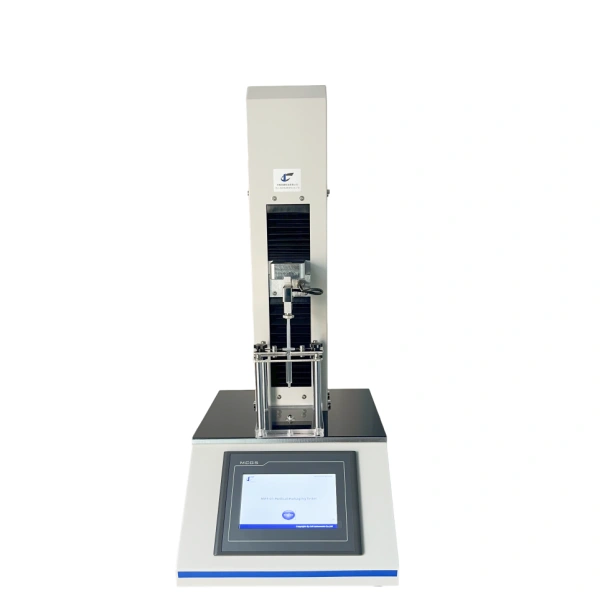
ISO 9626 Standard for Medical Stainless Steel Needle Tubing Test
إن ISO 9626 standard defines requirements and test methods for rigid stainless steel needle tubing used in medical devices. It covers dimensional tolerances, material properties, and mechanical performance across tubing sizes ranging from 3.4 mm to 0.18 mm.
A compliant medical stainless steel needle tubing test program typically includes:
- Mechanical property evaluation
- Surface and corrosion resistance testing
- Chemical extract testing
- Structural integrity verification
These requirements ensure consistent performance in applications such as syringe needle tubing test procedures and other critical medical uses.
Notably, ISO 9626 emphasizes that tubing performance must remain reliable even after integration into finished devices, making pre-assembly testing essential.
Key Mechanical Tests for Needle Tubing
Stiffness Evaluation (Three-Point Bending)
The stiffness test measures how tubing resists deformation under load. In this medical stainless steel needle tubing test, technicians place the tubing on two supports and apply force at the center.
Key parameters include:
- Controlled force application (up to 60 N)
- Defined span length based on tubing size
- Deflection measurement with high precision
This method ensures the tubing maintains sufficient rigidity during clinical use while avoiding excessive brittleness.
Tubing Break Resistance Test
إن tubing break resistance test is one of the most critical evaluations. It determines the resistance of tubing to breakage under repeated bending stress.
Test principle:
- One end of the tubing is fixed
- A force bends the tubing to a specified angle
- The tubing undergoes repeated cycles (typically 20 cycles)
- Visual inspection detects cracks or fractures
This test simulates real-world handling conditions, ensuring that needle tubing does not fail during insertion or use.
A well-executed medical stainless steel needle tubing test must include this procedure to verify durability and safety.
Syringe Needle Tubing Test for Functional Integrity
إن syringe needle tubing test focuses on performance within the final application. It evaluates how tubing behaves when integrated into syringe systems.
Typical checks include:
- Structural consistency under axial and lateral forces
- Compatibility with hub assembly
- Resistance to deformation during penetration
This test bridges the gap between raw material validation and finished product performance, making it indispensable in medical device manufacturing.
Additional Testing Requirements
Corrosion Resistance
Corrosion testing involves partial immersion of tubing in a sodium chloride solution under controlled conditions. After exposure, inspectors compare immersed and non-immersed sections.
Objective:
Ensure the tubing resists corrosion in physiological environments.
Chemical Extract Testing
This test evaluates whether soluble substances leach from the tubing when exposed to water at body temperature.
Importance:
Prevents contamination risks and ensures biocompatibility.
Why Medical Stainless Steel Needle Tubing Test Matters
A comprehensive medical stainless steel needle tubing test program delivers multiple benefits:
- Patient safety: Prevents breakage or failure during procedures
- الامتثال التنظيمي: Aligns with ISO 9626 and global standards
- Product consistency: Ensures uniform mechanical properties
- Brand credibility: Demonstrates commitment to quality
Ignoring or simplifying testing procedures can lead to device recalls, regulatory penalties, and reputational damage.
Recommended Testing Solution from Cell Instruments
For manufacturers seeking accurate and efficient testing, Cell Instruments Co., Ltd. offers advanced solutions tailored to needle tubing evaluation.
Their medical syringe testing systems support:
- High-precision force and displacement measurement
- Configurable fixtures for tubing break resistance test
- Automated test cycles for repeatability
- Data acquisition aligned with ISO requirements
These systems simplify complex medical stainless steel needle tubing test workflows while improving accuracy and efficiency.
In addition, Cell Instruments provides customized testing solutions and automation upgrades, enabling laboratories to adapt to evolving regulatory and production demands.
Best Practices for Reliable Testing
To ensure accurate and reproducible results:
- Calibrate equipment regularly to maintain precision
- Follow ISO 9626 parameters strictly for each tubing size
- Document all test conditions and results
- Train operators thoroughly in test procedures
- Use automated systems where possible to reduce human error
Consistency in execution is just as important as the test method itself.
Conclusion
إن medical stainless steel needle tubing test forms the backbone of quality assurance in medical needle manufacturing. By integrating stiffness evaluation, syringe needle tubing testو tubing break resistance test, manufacturers can ensure optimal resistance of tubing to breakage and long-term reliability.
Adhering to ISO 9626 not only guarantees compliance but also enhances product safety and performance. With advanced solutions from Cell Instruments, companies can achieve precise, efficient, and scalable testing processes—meeting both regulatory expectations and market demands.
 AR
AR  EN
EN  BG
BG  CS
CS  DA
DA  DE
DE  EL
EL  ES
ES  ET
ET  FI
FI  FR
FR  HU
HU  ID
ID  IT
IT  JA
JA  KO
KO  LT
LT  LV
LV  NB
NB  NL
NL  PL
PL  PT
PT  RO
RO  RU
RU  SK
SK  SL
SL  SV
SV  TR
TR  UK
UK