
Introduktion till ISO9626 Bilaga B
Den ISO9626 Bilaga B standarden ger en omfattande provningsmetod för att utvärdera styvheten hos nålslangar som används i medicintekniska produkter. Denna provning är nödvändig för att säkerställa att nålslang bibehåller den styvhet som krävs för säker och effektiv användning i medicinska applikationer, t.ex. sprutor och injektionsmedel. Genom att följa denna standard kan tillverkarna garantera att deras produkter uppfyller de säkerhets- och prestandakriterier som krävs.
Den Styvhetstest för nålslangar som beskrivs i bilaga B till ISO9626 är ett kritiskt förfarande för tillverkare av medicintekniska produkter, särskilt de som arbetar med sprutor och andra injicerbara produkter. Detta test hjälper till att avgöra om nålslangen har rätt mekaniska egenskaper för att fungera effektivt utan risk för fel under användning.
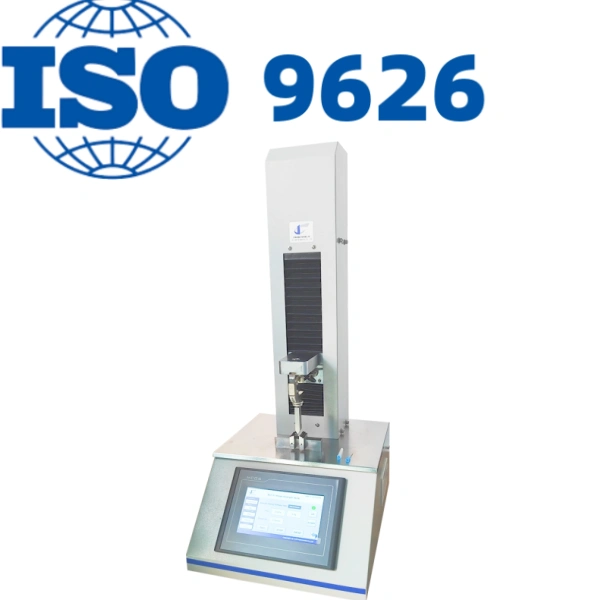
Vad är ISO9626 Bilaga B?
ISO9626 är en standard som reglerar hur tillverkning och testning av medicinska nålslangar som används vid tillverkning av sprutor och andra medicintekniska produkter. Bilaga B fokuserar särskilt på slangens styvhet, som är avgörande för sprutornas prestanda och deras förmåga att injicera innehållet på ett tillförlitligt och säkert sätt.
I bilaga B innebär provningsförfarandet att en kraft appliceras på mitten av slangen, som stöds i båda ändar, och att den böjning som uppstår mäts. Detta gör det möjligt för tillverkare att bedöma om slangens styvhet uppfyller de specifikationer som krävs för användning i sprutor, nålar och liknande medicintekniska produkter.
Styvhetstest för nålslangar: Det viktigaste förfarandet
Den Styvhetstest för nålslangar utförs med hjälp av en specialiserad apparat som applicerar en specifik kraft på slangen och mäter dess avböjning. Testet utförs enligt riktlinjerna i ISO9626 bilaga B, som specificerar de parametrar och den utrustning som krävs.
3-punkts böjprov för rörets styvhet
Den 3-punkts böjprov är en väsentlig del av Styvhetstest för nålslangar. Vid denna procedur placeras slangen på en testapparat som applicerar en nedåtriktad kraft på slangens mitt. Den spann mellan de två stödändarna justeras enligt standarden för den specifika slangstorleken.
Mängden nedböjning i mitten av slangen mäts och detta nedböjningsvärde används för att bedöma slangens styvhet. Detta test säkerställer att nålslang har rätt balans mellan styvhet och flexibilitet, vilket är avgörande för säkerheten och funktionen hos sprutor och andra medicintekniska produkter.
Utrustning för styvhetstest av nålslangar
För att utföra Styvhetstest för nålslangar, måste apparaten uppfylla de särskilda krav som anges i bilaga B till ISO9626:
- Kolv: En trubbig kilformad kolv med en cylindrisk radie på 1 mm används för att applicera en kraft på slangen. Kolven ska kunna utöva en kraft på upp till 60 N med en noggrannhet på ±0,1 N.
- Utrustning för mätning av deflektion: Utrustningen som används för att mäta nedböjningen ska ha en hög precisionsnivå och kunna mäta nedböjningen med en noggrannhet på 0,01 mm.
- Stöd och spännvidd: Slangen måste stödjas i båda ändar och spännvidden mellan stöden bör justeras enligt de angivna dimensionerna för slangen.
Injicerbarhetstest och dess betydelse
I tillägg till Styvhetstest för nålslangar, den test av injicerbarhet är en annan viktig utvärdering för medicinska nålar och sprutor. Detta test bedömer hur lätt innehållet kan injiceras genom nålen och säkerställer att nålen inte orsakar överdrivet motstånd eller problem under injektionsprocessen.
Den test av injicerbarhet innebär ofta att man simulerar verkliga förhållanden genom att applicera tryck på sprutan och mäta den kraft som krävs för att injicera innehållet. En nål som är för styv kan orsaka svårigheter vid injektionen, medan en nål som är för flexibel kan leda till instabilitet eller potentiellt fel.
Rollen för utrustning för sprutprovning
För tillverkare som följer ISO9626 Bilaga B, med användning av exakt Testutrustning för sprutor är nödvändig. Denna utrustning säkerställer att Styvhetstest för nålslangar och test av injicerbarhet utförs på ett korrekt och konsekvent sätt. Högkvalitativa testinstrument gör det möjligt för tillverkare att uppfylla lagstadgade krav och leverera säkra och tillförlitliga produkter.
Till exempel Test av rörets styvhet från Cellinstrument är utformat för att ge exakta styvhetsmätningar för nålslangar. Detta instrument är idealiskt för att testa styvhet hos nålslangen som används i sprutor och andra medicintekniska produkter, säkerställa efterlevnad av ISO9626 Bilaga B och andra relevanta standarder.
Den ISO9626 Bilaga B standard spelar en avgörande roll när det gäller att säkerställa säkerhet och prestanda för nålslangar som används i medicintekniska produkter. Standarden Styvhetstest för nålslangar är avgörande för att verifiera att slangen kan motstå de krafter som uppstår under användning och samtidigt bibehålla den flexibilitet som krävs för injektionsprocedurer.
Tillverkare kan säkerställa att deras produkter uppfyller de prestandastandarder som krävs genom att implementera 3-punkts böjprov för rörets styvhet och med tillförlitlig Testutrustning för sprutor i sina processer för kvalitetskontroll. Cellinstrument erbjuder avancerade Provningsutrustning för rörstyvhet för att hjälpa tillverkare att uppfylla dessa stränga krav och säkerställa kvaliteten på deras medicinska produkter.
 SV
SV  EN
EN  AR
AR  BG
BG  CS
CS  DA
DA  DE
DE  EL
EL  ES
ES  ET
ET  FI
FI  FR
FR  HU
HU  ID
ID  IT
IT  JA
JA  KO
KO  LT
LT  LV
LV  NB
NB  NL
NL  PL
PL  PT
PT  RO
RO  RU
RU  SK
SK  SL
SL  TR
TR  UK
UK  HE
HE  TH
TH  VI
VI