
Sterile insulin syringes require precise functional performance to ensure patient safety, dosage accuracy, and reliable drug delivery. ISO 8537 specifies the requirements and corresponding test methods for sterile single-use syringes, with or without needles, intended for insulin injection. The standard focuses on critical characteristics such as leakage resistance, piston operation force, dead space, and connection integrity between syringe components including the nozzle, hub, needle, barrel, piston, and rubber stopper.
For syringe manufacturers and quality control laboratories, compliance with ISO 8537 helps verify product consistency, reduce leakage risks, and improve injectability performance during clinical use. Modern testing systems also support automated data acquisition, repeatability analysis, and traceable quality documentation.
ISO 8537 establishes multiple verification procedures to evaluate the mechanical and sealing performance of sterile insulin syringes. The standard covers:
These evaluations ensure that the syringe maintains sealing capability during aspiration and injection while providing smooth plunger movement and accurate dosage delivery.
For manufacturers, these tests directly influence:
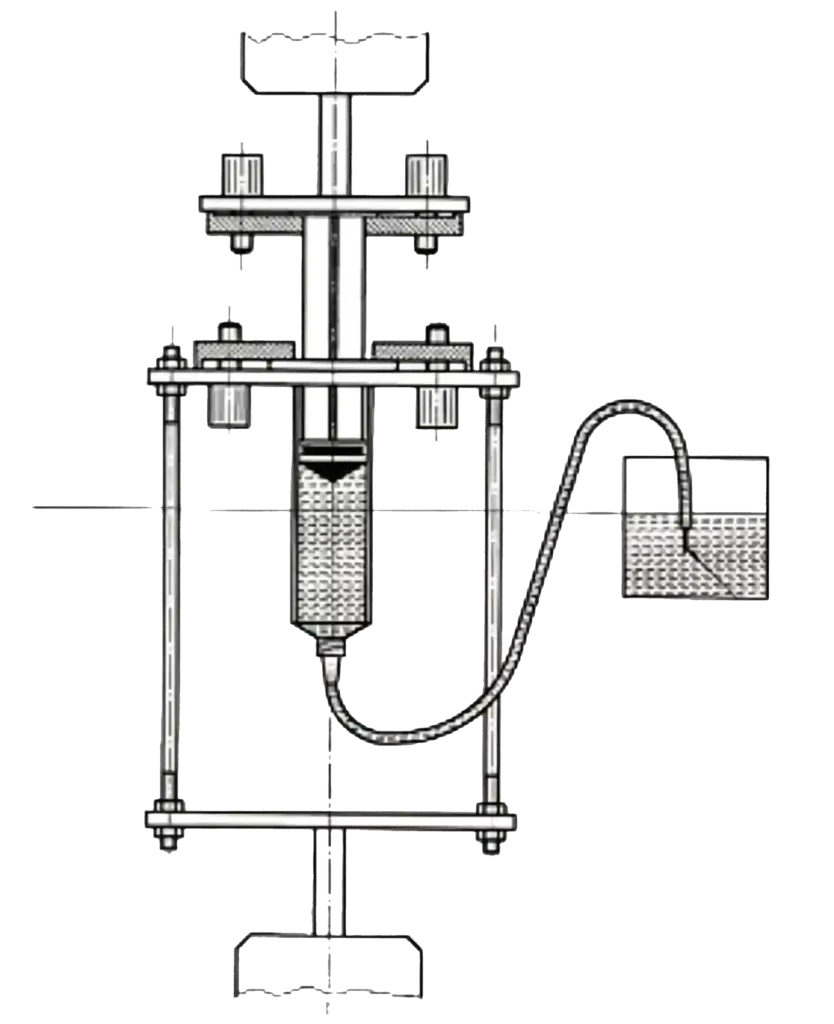
The syringeability and injectability test evaluates the operational characteristics of the syringe piston during fluid delivery. Annex C of ISO 8537 defines the determination of forces required to operate the piston.
During the procedure:
This process determines two important parameters:
Excessive break loose force may cause uncomfortable injection operation, while unstable glide force can negatively affect injection control and dosage accuracy.
Break loose and glide force testing plays a critical role in syringe usability evaluation. High-quality syringes should demonstrate:
A universal materials testing machine equipped with force sensors and customized syringe fixtures can accurately measure these parameters.
Cell Instruments recommends precision compression and tensile testing systems capable of:
These systems help syringe manufacturers optimize barrel surface finish, piston geometry, and silicone lubrication processes.
Leak testing for sterile single-use syringe products is one of the most important sections of ISO 8537 because leakage can compromise sterility, injection accuracy, and patient safety.
The standard evaluates both:
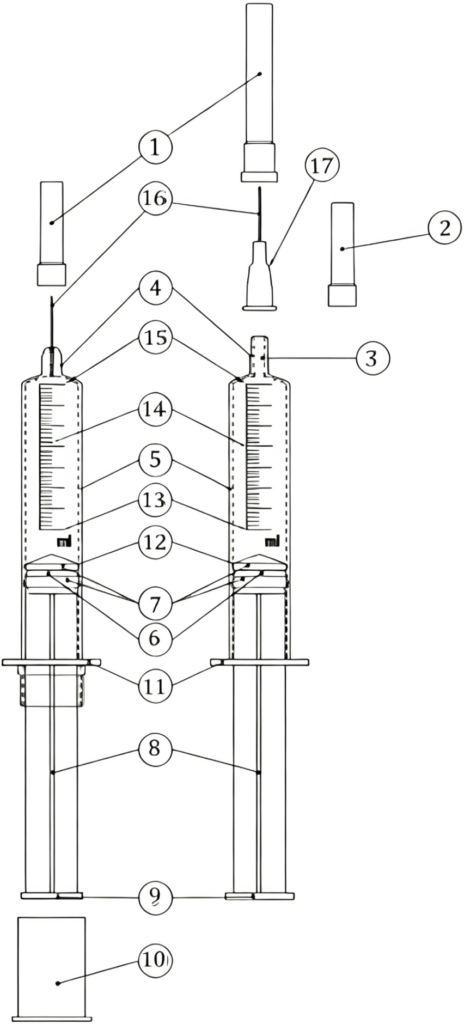
Leakage testing involves several syringe components including the:
Reliable sealing performance ensures that no fluid or air bypasses the sealing interfaces during normal use conditions.
| 1 | needle cap | 10 | plunger cap |
| 2 | nozzle cap | 11 | finger grips |
| 3 | nozzle lumen | 12 | fiducial line |
| 4 | nozzle | 13 | nominal capacity |
| 5 | barrel | 14 | graduation lines |
| 6 | plunger stopper | 15 | zero line |
| 7 | seals | 16 | needle tube |
| 8 | plunger | 17 | hub |
| 9 | push-button |
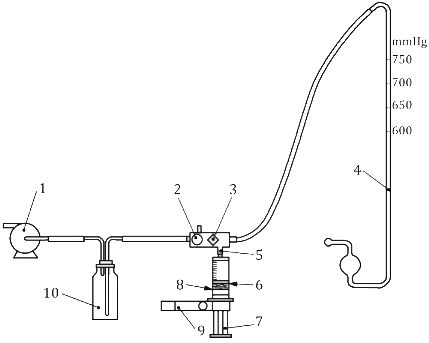
The syringe air leakage test described in Annex B and Annex F evaluates leakage under negative pressure conditions.
In Annex B, the syringe nozzle connects to a reference fitting and the syringe is partially filled with water. A vacuum of 88 kPa below atmospheric pressure is gradually applied. The operator then examines:
This procedure represents one of the most effective vacuum leak detection methods for insulin syringes.
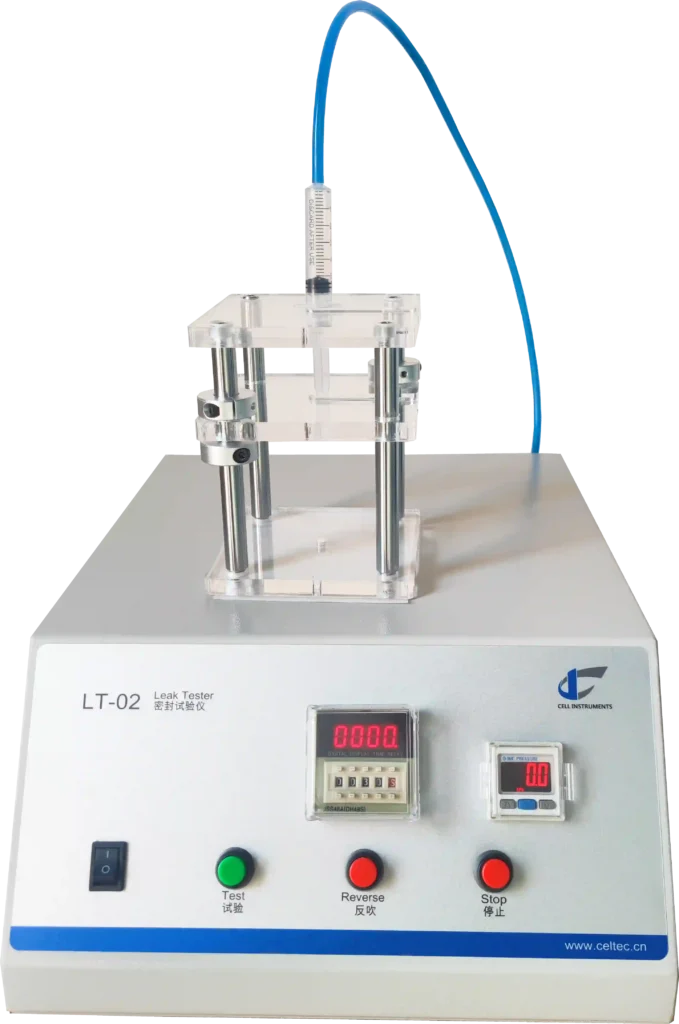
The syringe liquid leakage test specified in Annex E evaluates sealing performance under internal pressure conditions.
The syringe is:
During the test, inspectors evaluate:
This method verifies the integrity of sealing interfaces during injection simulation.
A properly designed pressure leakage testing system can help manufacturers evaluate:
Dead space measurement is essential for insulin syringes because residual fluid directly affects dosage precision.
ISO 8537 defines dead space as the remaining water volume after complete plunger depression.
The procedure includes:
The remaining mass corresponds to residual volume.
Low dead space syringes help:
Testing equipment with analytical balances and controlled handling fixtures improves measurement consistency for quality assurance programs.
ISO 8537 testing evaluates the interaction between multiple syringe components rather than isolated parts.
Critical interfaces include:
| Component | Functional Importance |
|---|---|
| Nozzle | Fluid transfer integrity |
| Hub | Needle connection stability |
| Needle | Injection performance |
| Barrel | Dimensional accuracy |
| Piston | Smooth operation and sealing |
| Rubber Stopper | Leakage prevention |
Any inconsistency among these components may lead to:
Comprehensive testing therefore requires integrated mechanical and leakage evaluation systems.