
En syringe closure system liquid leakage test is crucial for evaluating the integrity and functionality of syringe closure systems, such as needle shields and tip caps. This test ensures that syringes are capable of withstanding internal pressure during the filling process and transportation, thereby preventing potential leakage. For accurate and reliable results, this test follows the guidelines specified in ISO 11040-4. In this article, we will delve into the testing procedure, apparatus, and significance of this test for quality assurance in the pharmaceutical and medical device industries.
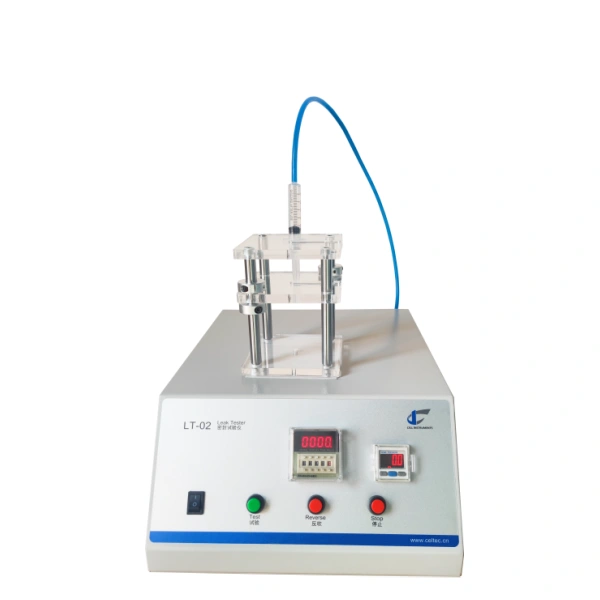
Overview of the Syringe Closure System Liquid Leakage Test
The primary aim of the syringe closure system liquid leakage test is to assess the resistance of syringe closures to liquid leakage under controlled conditions. This is especially important during the filling and transportation of syringes, where overpressure might occur. To ensure syringe safety, a test pressure of 110 kPa is applied to simulate real-world conditions, as specified by ISO 11040-4.
ISO 11040-4 and Its Importance in Syringe Testing
ISO 11040-4 outlines the standard for syringe systems, focusing on the closure mechanism and its ability to resist leakage. The Syringe Leak Tester adheres to the principles defined in this standard, ensuring that syringes meet the necessary performance criteria. The test method is designed to replicate the pressures and conditions that syringes will face during manufacturing, transport, and storage.
ISO 11040-4 not only defines the leakage test procedure but also specifies the apparatus, sample preparation, and documentation required to evaluate syringe closure systems. This test provides pharmaceutical manufacturers and quality control personnel with the necessary data to ensure syringe integrity before they are used in medical procedures.
Testing Procedure for Syringe Closure System Liquid Leakage
The procedure for testing syringe closure systems for liquid leakage involves several steps:
Preparación de la muestra
- Sterilized, subassembled syringes are prepared for the test.
- The syringes are filled to between 1/3 and 2/3 of their nominal fill volume with reagent-grade water.
- The syringes are placed in a soporte de jeringa, ensuring they are securely positioned for the test.
Pressure Application
- A pressure of 110 kPa is applied to the syringe closure system using either a universal tensile testing machine or compressed air. The pressure is held for 5 segundos to simulate real-world conditions.
Leakage Monitoring
- During and after the application of pressure, the syringe closure system is monitored for any visible leakage. The test is considered successful if no leakage is observed, and the closure system remains intact without any wet surfaces around the tip cap or needle shield.
Test Documentation
- The test report includes essential data such as the applied pressure, the number of tested samples, and the pass/fail results. This documentation is crucial for ensuring traceability and maintaining quality standards.
Key Components of the Syringe Closure System Liquid Leakage Test
- Syringe Holder – A device used to secure the syringe during testing.
- Plunger Rod and Piston – These components help apply the necessary force to the syringe during the test.
- Testing Apparatus – A universal tensile testing machine or pressurization system ensures consistent application of pressure.
Advantages of Syringe Leak Testers
Syringe Leak Testers, such as those provided by Instrumentos celulares, offer several advantages:
- Precision Testing – With a high sampling rate (500 Hz), the test delivers accurate results, particularly when peak measurements are required.
- Compliance with ISO Standards – These testers are designed in accordance with ISO 11040-4 y ISO 11040-4 Anexo G2, ensuring that the test is both reliable and industry-compliant.
- Versatility – The testers are suitable for various syringe configurations, including both needle shields y tip caps, making them an essential tool for quality control in the pharmaceutical industry.
Conclusion
En syringe closure system liquid leakage test is a vital procedure for ensuring the safety and reliability of syringes in medical applications. By adhering to the guidelines set forth in ISO 11040-4, manufacturers can confidently assess the integrity of syringe closure systems. Using advanced Syringe Leak Testers like those from Instrumentos celulares ensures that syringes meet the necessary standards for leakage resistance, ultimately helping to safeguard public health.
Call to Action
For more information on Syringe Leak Testers or to inquire about Instrumentos celulares testing solutions, feel free to contact us. Our products provide unmatched accuracy and compliance with industry standards to support your quality control needs.
 ES
ES  EN
EN  AR
AR  BG
BG  CS
CS  DA
DA  DE
DE  EL
EL  ET
ET  FI
FI  FR
FR  HU
HU  ID
ID  IT
IT  JA
JA  KO
KO  LT
LT  LV
LV  NB
NB  NL
NL  PL
PL  PT
PT  RO
RO  RU
RU  SK
SK  SL
SL  SV
SV  TR
TR  UK
UK