
Portāls hypodermic syringes test plays a critical role in ensuring the safety, accuracy, and usability of disposable medical syringes. In pharmaceutical and medical device manufacturing, even minor defects in syringe performance may lead to liquid leakage, dosage inaccuracies, or poor user experience, directly affecting patient safety. For this reason, international standards and reliable testing equipment form the foundation of syringe quality control.
At Cell Instruments, we support manufacturers, laboratories, and quality inspection agencies with professional syringe testing solutions. By combining material testing expertise with automation and customized instrumentation, we help users establish reliable and repeatable hypodermic syringes test procedures across the entire product lifecycle.
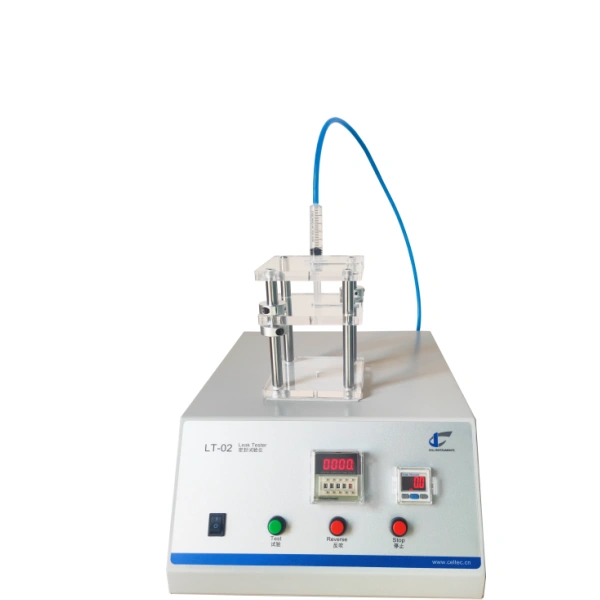
Hypodermic Syringes Test Requirements under ISO 7886-1
ISO 7886-1 defines the essential performance requirements for sterile hypodermic syringes intended for manual use. The standard emphasizes functional integrity, operational safety, and dimensional consistency, making it a core reference for syringe manufacturers and regulatory audits.
Within the hypodermic syringes test framework, ISO 7886-1 focuses on several critical performance aspects:
- Freedom from air and liquid leakage
- Controlled forces required to operate the piston
- Minimal dead space
- Secure fit between plunger stopper and barrel
These test items collectively ensure that the syringe maintains container integrity, delivers accurate volumes, and performs smoothly during clinical use.
Liquid Leakage at Syringe Test and Its Importance
One of the most sensitive procedures in the hypodermic syringes test is the liquid leakage at syringe test. This test verifies whether the plunger stopper and sealing system can prevent fluid escape when the syringe experiences internal pressure.
According to ISO 7886-1 Annex D, liquid leakage is evaluated by filling the syringe with water, sealing the nozzle, and applying both axial pressure and lateral force to the plunger. No visible leakage past the plunger stopper seals is allowed during the specified holding time.
This test directly reflects real-world conditions, such as injection resistance and accidental side loading during handling. Reliable liquid leakage testing protects against under-dosing, contamination, and loss of sterility.
Cell Instruments provides dedicated syringe leakage testing solutions that allow precise pressure control and stable force application, supporting accurate compliance with ISO 7886-1 requirements.
Air Leakage Testing and ISO 7886-1 Leak Tester Solutions
Air leakage testing forms another essential part of the hypodermic syringes test. ISO 7886-1 Annex B specifies a vacuum-based method to detect air leakage past the plunger stopper during aspiration.
An ISO 7886-1 leak tester typically includes a vacuum generation system, a manometer, and a secure syringe fixture. During testing, negative pressure is applied through the syringe nozzle, and any pressure decay or visible leakage indicates a failure.
This method aligns with modern leak test NDT principles, as it evaluates package integrity without damaging the syringe. Compared with traditional visual checks, vacuum-based air leakage testing delivers higher sensitivity and better repeatability.
Forces Required to Operate the Piston and User Experience
Portāls forces required to operate the piston directly influence syringe usability and clinical comfort. Excessive force may cause hand fatigue or dosing errors, while insufficient resistance may compromise control.
ISO 7886-1 Annex E recommends measuring:
- Force to initiate plunger movement
- Mean force during piston travel
- Maximum force during piston travel
A texture analyzer or mechanical testing machine records the force–displacement curve while the piston moves at a controlled speed. This hypodermic syringes test ensures smooth operation, consistent lubrication, and proper material interaction between the plunger stopper and barrel.
Cell Instruments integrates texture analysis expertise into syringe testing systems, offering high-resolution force measurement and stable motion control.
Dead Space Evaluation in Hypodermic Syringes Test
Dead space refers to the residual liquid remaining inside the syringe after full depression of the plunger. ISO 7886-1 Annex C defines a gravimetric method to quantify this volume.
Although dead space measurement appears simple, it directly affects drug waste and dosing accuracy. Within a complete hypodermic syringes test program, controlling dead space supports both economic efficiency and infection risk reduction.
Why Choose Cell Instruments for Syringe Testing
Cell Instruments designs and manufactures professional syringe testing equipment tailored to ISO standards and real production needs. Our ISO 7886-1 leak tester and syringe performance testing systems offer:
- Accurate pressure and force control
- Stable, repeatable test results
- Support for air leakage, liquid leakage, and piston force testing
- Custom fixtures for different syringe sizes and formats
With extensive experience in medical packaging and materials testing, we help customers build compliant, efficient, and auditable hypodermic syringes test solutions.
Conclusion
A robust hypodermic syringes test program ensures that syringes meet ISO 7886-1 requirements for leakage resistance, operational force, and functional integrity. By adopting standardized methods and reliable testing instruments, manufacturers can improve product quality, reduce risk, and strengthen regulatory compliance.
Cell Instruments remains committed to providing advanced syringe testing solutions that combine precision, flexibility, and professional technical support for global medical and pharmaceutical industries.
 LV
LV  EN
EN  AR
AR  BG
BG  CS
CS  DA
DA  DE
DE  EL
EL  ES
ES  ET
ET  FI
FI  FR
FR  HU
HU  ID
ID  IT
IT  JA
JA  KO
KO  LT
LT  NB
NB  NL
NL  PL
PL  PT
PT  RO
RO  RU
RU  SK
SK  SL
SL  SV
SV  TR
TR  UK
UK